

|
 |
Over the holidays I experimented with a new turning material “Polymer Clay”. I was familiar with this materials use in crafts and I also saw a few pens made from it. Since that time I have been wanting to experiment with it for use as a substitute for finials, inlays and borders in turned pieces.
Polymer clay is a clay that at room temperature is soft and pliable. It is hardened by cooking it at 275 degrees for 30 minutes per 1/4 inch (Premo brand). When it is hardened correctly (which I have found to be a bit unpredictable) it turns easily, somewhat like acrylic. Many different effects are possible. In this case I used extruded polymer clay hearts, embedded in a black base clay as the decorative segment in the Madrone hollow form.
Donny
| First knead black clay and then roll it to a consistent thickness between a couple of 1/4 thick slats. | 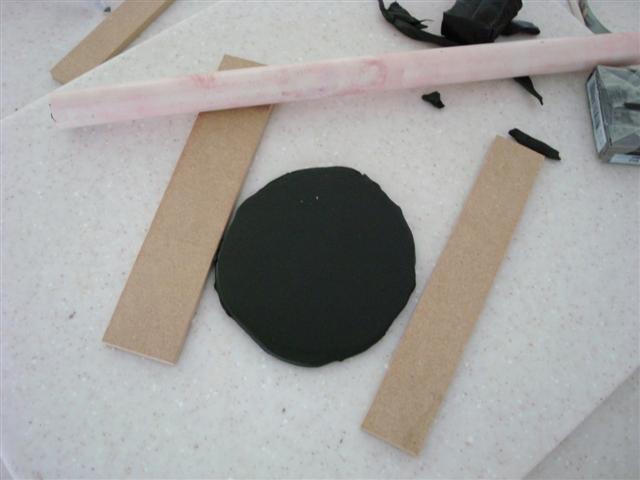 |
| Then a slice of 4″ black pipe was used as a cookie cutter to make a more or less round disk. | 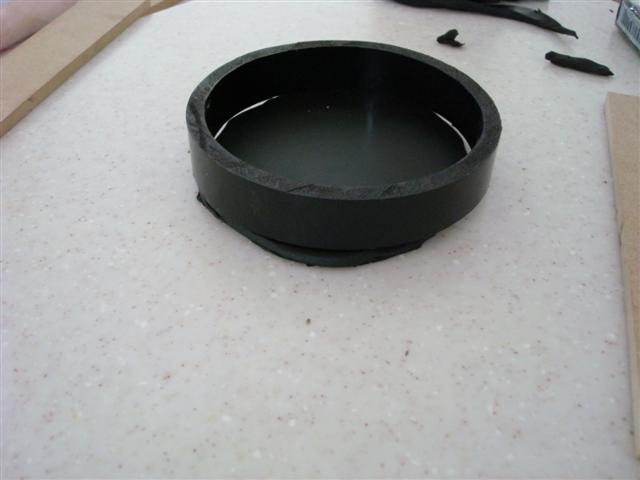 |
| Use previously extruded and baked heart shaped strips. Cut them to lengths about equal to the radius. | 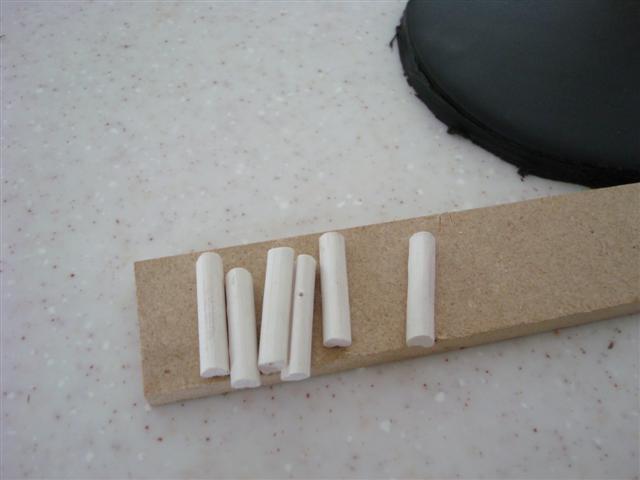 |
| Push the heart strips into the clay in a radial pattern. Insure there are no voids. Bake this disk at 275 degrees for 30min. | 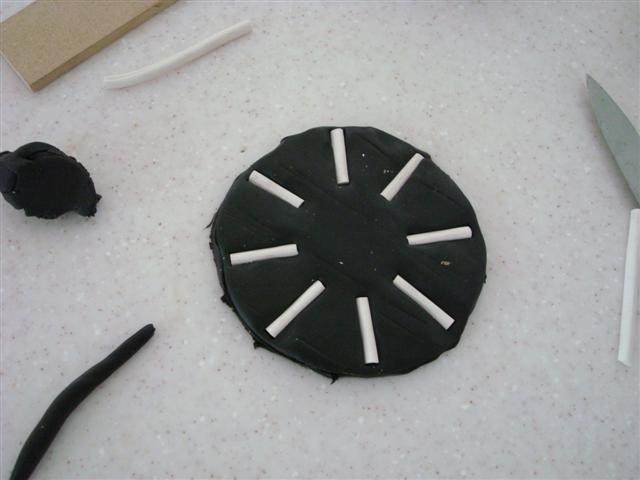 |
| Make a jam chuck with a tenon in the middle that matches the same size hole drilled in the disk. | 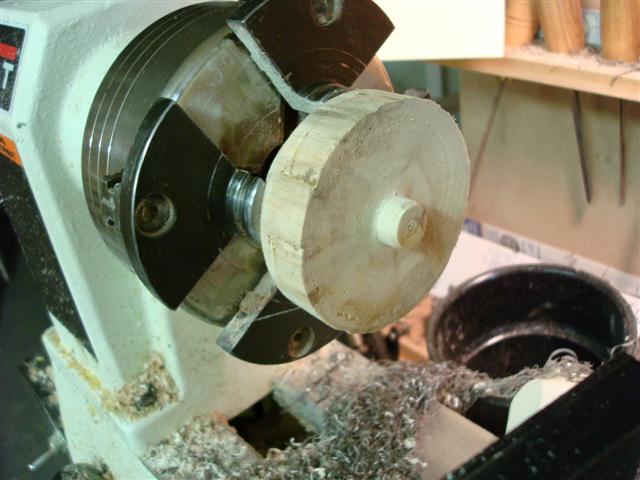 |
| Mount the disk on the jam chuck with hot melt glue and turn the face flat. | 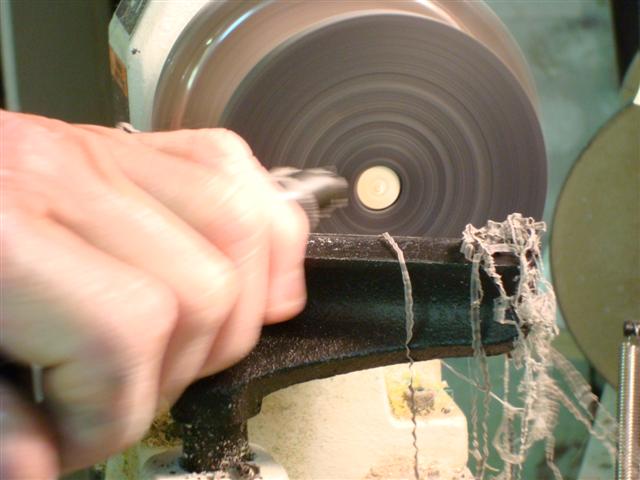 |
| Flip it over and turn the alternate surface flat. | 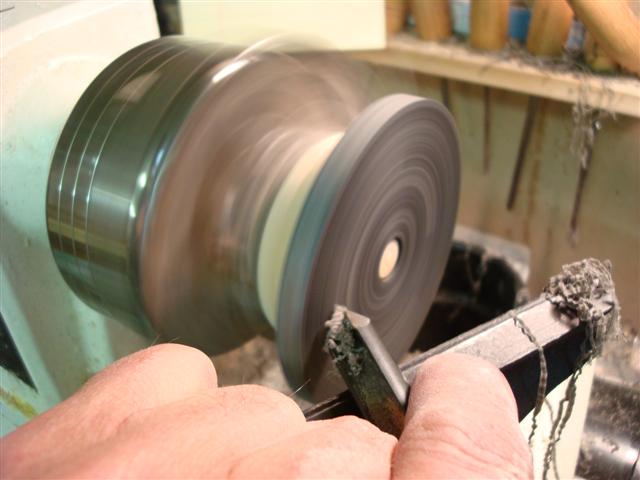 |
| Trim the edge with a skew. | 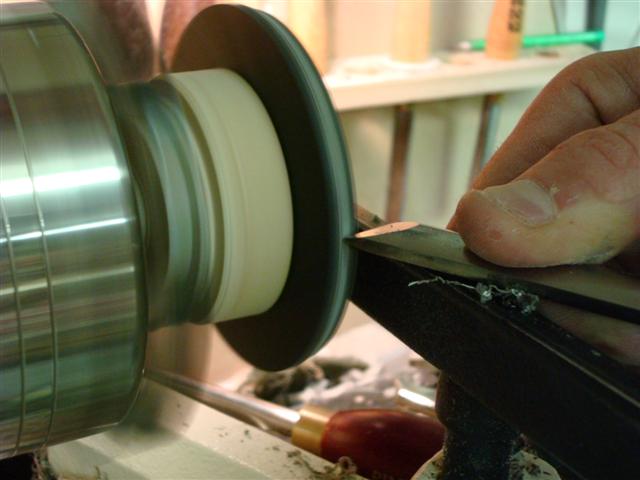 |
| The disk is now ready to laminate in the turning. | 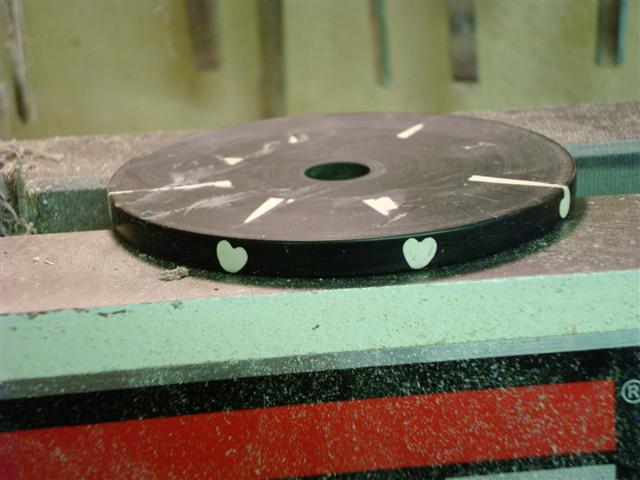 |
| I glued this disk between the sections of a turned Madrone form, then hollowed it. | |
Visit the store for books on wood turning techniques, software and plans.

Great information, I have used clay in a couple of projects, mainly for accent pieces but never on this scale. Great idea.
Doug in AZ.
Thanks for visiting Doug,
I still have trouble getting it to bake consistently, when that is resolved I will be using it for many accents.
Donnie
I like the black back drop!
James,
I agree 🙂